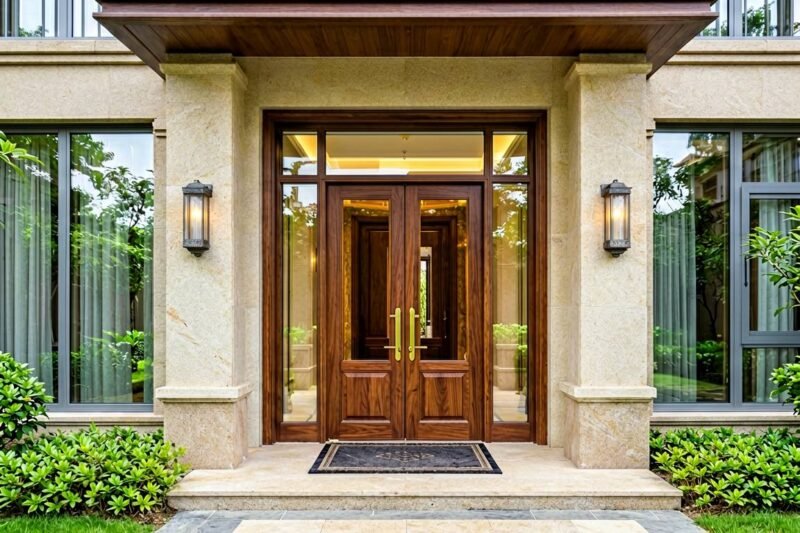
Choosing the right interior door is one of the most overlooked decisions in a residential build, yet it shapes daily comfort, acoustics, and perceived quality for years. Whether you are a distributor sourcing for a villa development, a contractor fitting out apartments, or a homeowner renovating, this guide walks through the factors that actually matter on site and in the showroom.
1. Match the Door to the Room Function
Not every room needs the same door. Bedrooms and home offices benefit from solid-core or wooden interior door options that dampen sound. Bathrooms and kitchens need moisture-resistant skins and a tight seal. Closets and utility rooms can use lighter, cost-efficient panels. Defining the function first prevents over-specifying (wasted budget) or under-specifying (poor performance).
2. Material: Wood, UPVC, Aluminum, or WPC
Each material carries trade-offs:
- Wooden doors – Premium look, warm feel, best for high-end villas; needs stable humidity.
- UPVC doors – Affordable, waterproof, ideal for humid climates and rental stock.
- Aluminum doors – Slim, durable, modern; pairs well with windows and doors systems.
- WPC (wood-plastic composite) – Termite-proof, dimensionally stable, low maintenance.
For most export markets, a mix of wooden doors for living zones and WPC or UPVC for wet areas gives the best value.
3. Sizing and Opening Direction
Standard leaf widths are 600–1000 mm. Always confirm rough-opening dimensions from the architect before ordering, and decide swing direction (inswing/outswing) and left/right handing. For retrofit projects, measure the existing frame rather than the leaf.
4. Soundproofing and Fire Rating
If the project targets apartments or hotels, ask for a tested STC (Sound Transmission Class) rating—typically STC 28–32 for solid-core doors. Fire-rated cores (30/60 min) are mandatory in many commercial and multi-family codes; pair them with certified frames and seals.
5. Surface Finish and Hardware Prep
Factory-primed or prepainted leaves save on-site labor. Confirm hardware preparation: pre-bored lockset holes, hinge mortises, and whether the door ships as a slab or pre-hung unit. Pre-hung doors speed installation and improve alignment.
6. Import and Logistics Considerations
When importing, verify packaging (foam-corner + carton + wooden crate for containers), lead time, and whether the interior door supplier provides CAD drawings and certification (CE, ISO9001). Consolidating doors with windows and doors in one shipment reduces freight cost per unit.
Frequently Asked Questions
Which interior door is best for a humid climate?
WPC or UPVC skins resist swelling and termite damage better than solid wood in coastal and tropical regions.
Should I buy slabs or pre-hung doors?
Pre-hung units install faster and align better, especially for non-professional labor. Slabs are cheaper but need skilled carpentry.
Get a Custom Quote
KENT manufactures wooden, WPC, UPVC, and aluminum interior doors with OEM/ODM options, CAD support, and global shipping. Contact our team with your project drawings for a tailored quotation within 24 hours.