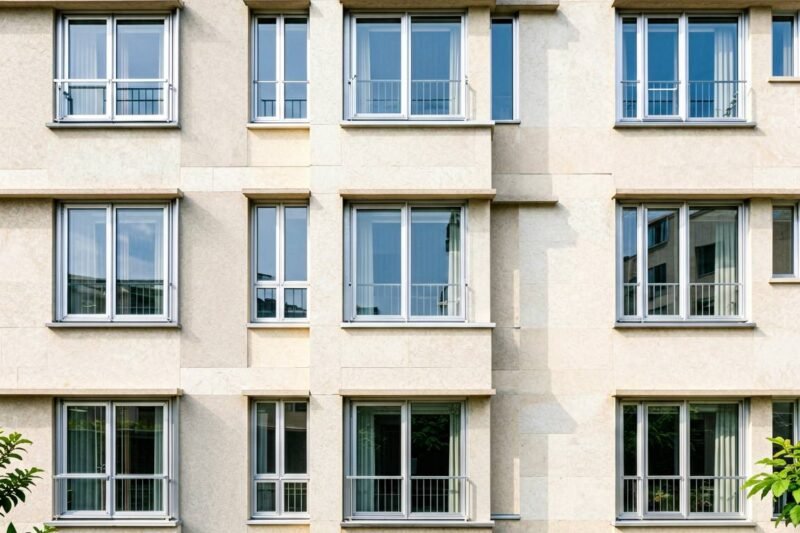
Broken bridge aluminum windows—also called thermal-break windows—solve aluminum’s one weakness: conductivity. A polyamide strip separates the inner and outer frames so heat cannot travel straight through the metal. This article explains why they matter for importers.
Why Plain Aluminum Loses Heat
Aluminum conducts heat ~1000x faster than wood. A single-frame window becomes a thermal bridge: warm indoor air meets cold metal, drops in temperature, and condenses. Energy leaks and windows sweat.
How the Thermal Break Works
A non-conductive polyamide (PA66GF25) bar is inserted between the exterior and interior profiles. It mechanically joins the frame while electrically isolating the two sides, cutting conduction by 40–60%.
Measurable Benefits
Lower energy bills – Less heating/cooling loss through the envelope.
No condensate – Interior surface stays above dew point.
Comfort – No cold drafts near windows.
Code compliance – Meets passive-house and strict-climate standards.
Specifying for Export
Request U-value (W/m²K) and confirm the break width (typically 14–34 mm). Pair with double or triple glazing and warm-edge spacers for best results. KENT supplies certified aluminum windows with thermal breaks for EU, North American, and Middle East markets.
Thermal Break vs Standard
Factor
Standard
Broken Bridge
U-value
High
Low
Condensate
Yes
Rare
Cost
Lower
Higher
FAQ
Is the break weak?
No—mechanical interlocking makes the joint as strong as the profile; it only blocks heat, not load.
Request a Quote
Contact KENT for thermal-break window specs and a quotation.